Study
 Download
Gangl, K., & Biró, T. (2026). U.S. Brands Under Pressure? Transatlantic tensions and their consequences for consumption in Germany. NIMpulse 14
U.S. Brands Under Pressure?
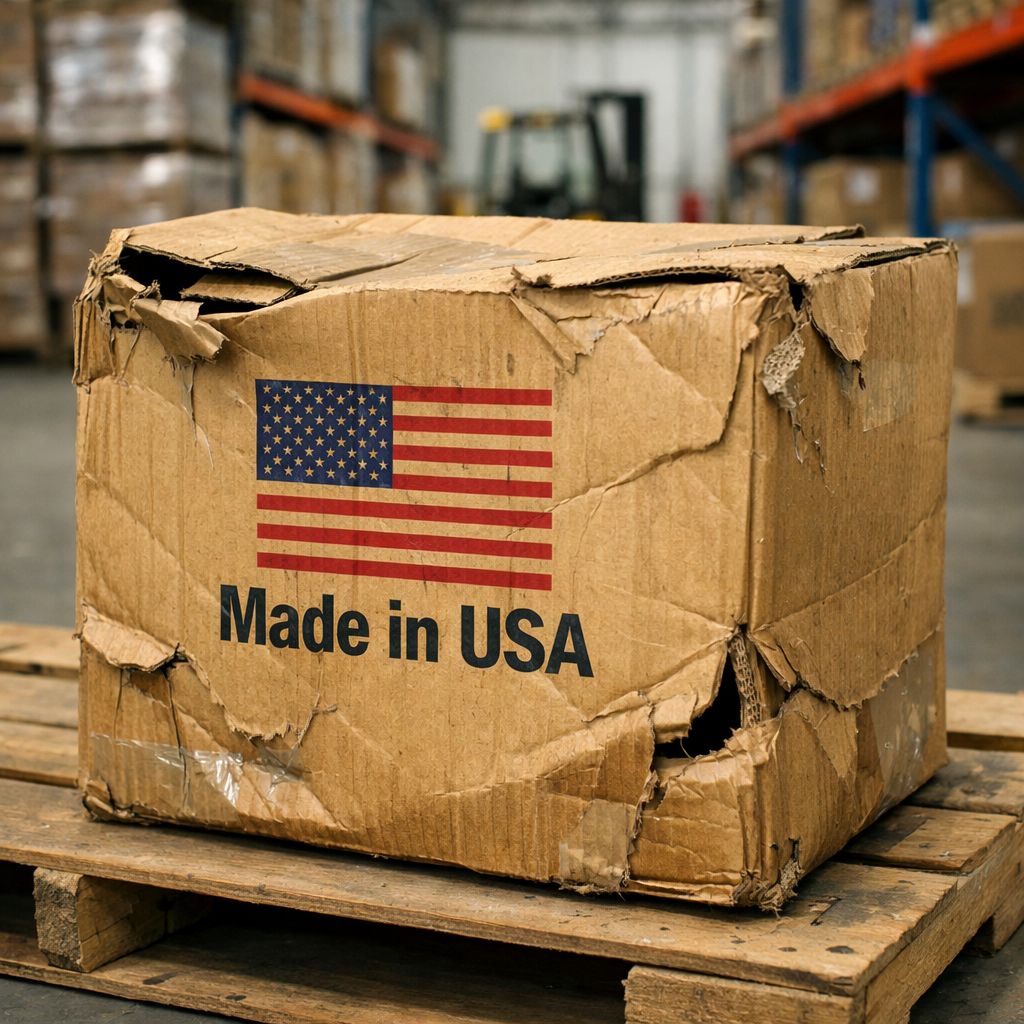
The transatlantic trade structure has been characterized by considerable tensions, especially since Donald Trump took office. The current U.S. president has not only imposed new tariffs on European goods, but has also caused political uncertainty through threats to withdraw from the Atlantic security alliance. Additionally, with the implied annexation of Greenland, there were initial calls to boycott American products in Denmark.
Against this background, this study examines whether and how consumers in Germany are reacting to this situation. The aim is to clarify the extent to which political differences affect the perception of American brands and whether this leads to a deliberate purchase avoidance or even to boycott efforts.
To this end, the Nuremberg Institute for Market Decisions (NIM) surveyed a representative sample of adults in Germany at the beginning of 2026. The focus is on the question of whether U.S. products are deliberately avoided and whether consumers would like greater transparency about product origin.
Does the current U.S. policy influence consumer behavior or attitudes toward U.S. brands in Germany?
People in Germany see opportunities to influence U.S. President Trump's policies through their own consumer behavior, even more so through EU policy. More than half of those surveyed believe that there would be a greater effect if consumers bought fewer U.S. products. In each case, over 60% of respondents believe that EU options such as new trade agreements or robust countermeasures to U.S. initiatives are effective.
Among those surveyed, 35% report that U.S. policy has influenced their consumer behavior or their attitude toward U.S. brands. Specifically, 17% state that they have avoided U.S. products or services. As many as 19% have recently searched for European alternatives, while 16% would like to limit their use of U.S. products. On the other hand, 27% continue to use U.S. brands as usual and have no plans to restrict their use.
Differences in how people deal with U.S. brands are particularly evident by age group. Younger people state comparatively often that they speak negatively about U.S. products and services. While 15% of 18‑ to 39‑year‑olds report doing this, the figure for 60- to 74-year-olds is only 6%. In contrast, older people are more likely than average to say they have recently avoided U.S. brands (60- to 74-year-olds: 24%, 18- to 39-year-olds: 13%).

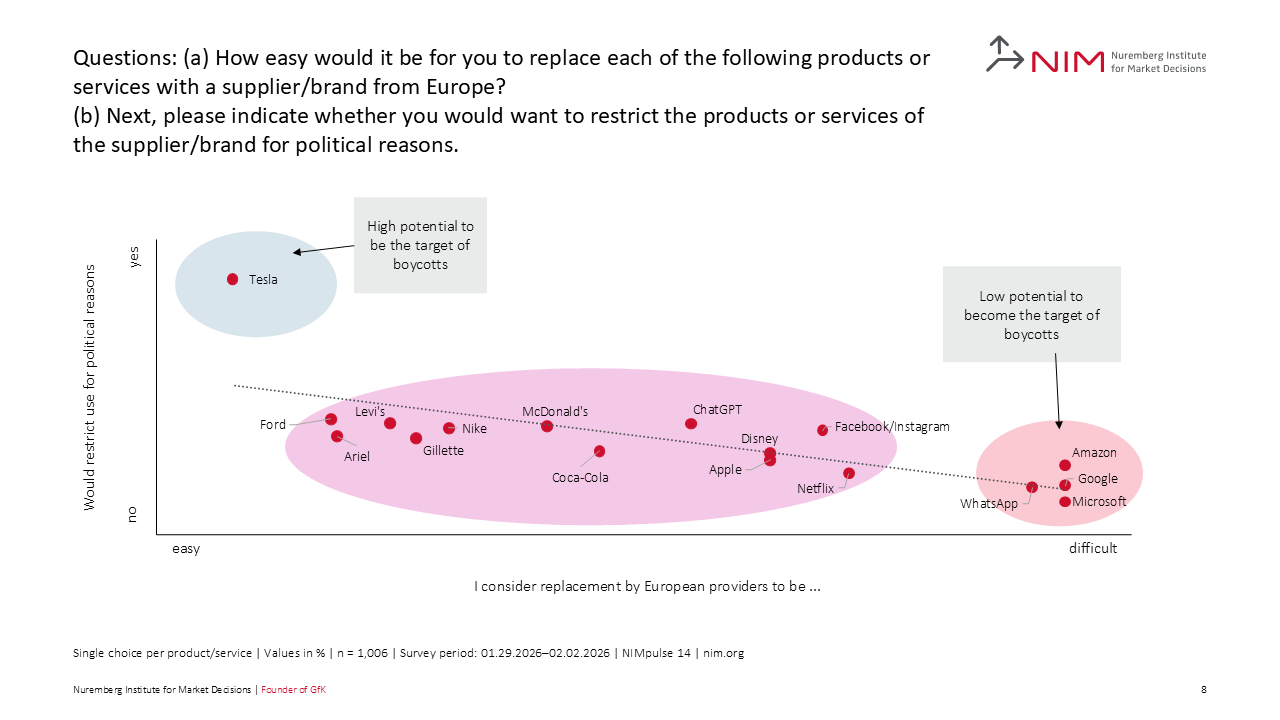
Large tech companies such as Google and Amazon are seen as difficult to replace, and only a few people say they want to use them less. Successful boycotts are unlikely here. Other U.S. brands are in the middle range in terms of replaceability, with very few people currently wanting to reduce their demand for them. Boycotts are currently unlikely here, but they are conceivable. The only brand that is currently considered easily replaceable and that many people say they would like to avoid in the future is Tesla.
Do consumers in Germany want additional information about the origin of products?
Although a broad boycott of U.S. products is currently not observable, a majority of Germans would like to see better information on the origin of products and services. For example, 36% would like to see a mandatory logo on packaging that clearly indicates the company’s origin at a glance. Around a third would like to see shelf signage (30%) or origin-related filter options in online retail (29%). Meanwhile, 16% find app‑based origin information appealing.
Only 8% say they would judge U.S. brands more negatively for political reasons, even though brands cannot influence government policy. Half believe that U.S. companies can do something to avoid a negative assessment. At 29%, the option of producing in the EU has the highest level of support. Public criticism of U.S. policy, local tax payments within the EU, and value communication are each seen as sensible measures by around a quarter of respondents.

Authors
- Dr. Katharina Gangl, Director Studies, NIM, katharina.gangl@nim.org
- Tobias Biró, Head of Research Communication, NIM, tobias.biro@nim.org
Contact